Showing posts with label anglophile. Show all posts

Thursday, 10 December 2015

Treasures of Britain; Knutsford, Cheshire


Knutsford is an attractive town, with a Georgian parish church and a nicely winding main street, whose most conspicuous building - looking like some kind of mad fugitive from Gaudi's Barcelona - is the King's Coffee House of 1907.


 Methodist church


The Ruskin Rooms building

Gaskell memorial tower 

Gaskell memorial tower and King's coffee house

© KH

Thursday, 3 December 2015

Treasures of Britain; Derwent Water Lake District


Derwent Water (or Derwentwater) is one of the principal bodies of water in the Lake District National Park in north west England. It lies wholly within the Borough of Allerdale, in the county of Cumbria.
The lake occupies part of Borrowdale and lies immediately south of the town of Keswick. It is both fed and drained by the River Derwent. It measures approximately 3 miles (4.8 km) long by 1 mile (1.6 km) wide and is some 72 feet (22 m) deep. There are several islands within the lake, one of which is inhabited. Derwent Island House, an 18th-century residence, is a tenanted National Trust property open to the public on five days each year.


Derwentwater is a place of considerable scenic value. It is surrounded by hills (known locally as fells), and many of the slopes facing Derwentwater are extensively wooded. A regular passenger launch operates on the lake, taking passengers between various landing stages. There are seven lakeside marinas, the most popular stops being: Keswick, Portinscale and the Lodore Falls, from which boats may be hired. Recreational walking is a major tourist activity in the area and an extensive network of footpaths exists within the hills and woods surrounding the lake. 

The Keswick—Borrowdale road runs along the eastern shore of the lake and carries a regular bus service. There is a lesser, or unclassified, road along the western shore connecting the villages of Grange and Portinscale.
Derwentwater gave its name to the Earldom of Derwentwater.
The lake is believed to be the last remaining native habitat of the vendace (Coregonus vandesius) fish from the 4 originally known sites: Bassenthwaite Lake and Derwent Water in the Lake District and the Castle Loch & Mill Loch in Lochmaben.


 Derwent water dam

Derwent water millenium stones

© KH

Thursday, 26 November 2015

Treasures of Britain; cemeteries

Brookwood, Woking, Surrey

I don't know why but I'm crazy about old cemeteries. Especially those in Great Britain. The old (sometimes very old) gravestones tell each their very own story. The lovely statues, angels, crosses and others... I just don't know what it is that makes me want to go there everytime I'm across the canal. So today just some impressions of those lovely little gems.

Iona Abbey, Scotland
Duncan, the Scottish king murdered by Macbeth in 1140, is reputed to be buried here, along with 47 other Scottish kings and a number of Scottish saints. 

 Angels at the Arnos Vale Cemetery, Bristol

 Highgate cemetery London

Highgate Cemetery London

 Grave of Dante Gabriel Rossetti; All Saints Birchington, Kent

I've been here, a grave not befitting of a King... sad
King Arthur's grave, Glastonburry Abbey

St Cuthbert's Churchyard Edinburgh

St Cuthberth's Edinburgh

St Paul's Cathedral London

St Paul's Cathedral, London

© KH


Thursday, 19 November 2015

Treasures of Britain; Rievaulx Abbey


Rievaulx Abbey is England’s most beautiful ruin. Deliberately built in a remote valley by Cistercian monks, it was originally a virtually self-sufficient community.
Like 839 other monasteries, friaries and nunneries, Rievaulx was suppressed by Henry VIII in the 1530s, but its remote position meant that much of its stonework still stands. It is easy to forget what a big role monasteries played in medieval society, and the Cistercian houses of Yorkshire were responsible for developing a style of building with pointed arches that we call Gothic.
This spread to become the dominant architectural style of Britain for 300 years.


 © KH

Thursday, 12 November 2015

Treasures of Britain; Castle Stalker


Castle Stalker is a private castle, perched on a rocky outcrop at the entrance to Loch Laich, south of Portnacroich. It is surrounded by an aura of romantic splendour.
Castle Stalker - in Gaelic, Stalcaire, meaning Hunter or Falconer – is believed originally to have been the site of a Fortalice (a small fortified building) belonging to the MacDougalls when they were Lords of Lorn, and built around 1320. The MacDougalls lost their title after their defeat by King Bruce at Brander Pass in 1308 but regained it for a period after 1328. In about 1388 the Lordship of Lorn passed to the Stewarts of Appin, the lands including Castle Stalker.
The Castle was abondoned around c1800 and restored in the 1970s by Colonol Stewart Allwood.


inside the castle

Loch Laich-Castle Stalker

Monty Python and the Holy Grail and Castle Stalker

© KH

Thursday, 5 November 2015

Treasures of Britain; Duncombe Park, Yorkshire


Duncombe Park is one of Yorkshire’s foremost historic houses and estates, and home to the Duncombe family. The house is closed to the public, but the spectacular landscape garden, the International Centre for Birds of Prey, and the surrounding parkland are open to visitors.
The site was a film location for Parade's End.


Duncombe Park in Helmsley, North Yorkshire was transformed into Groby Hall, the country residence of the Tietjens family, for new BBC drama Parade's End

 Benedict Cumberbatch as Christopher Tietjens


Only open for weddings

drawing room


© KH

Thursday, 22 October 2015

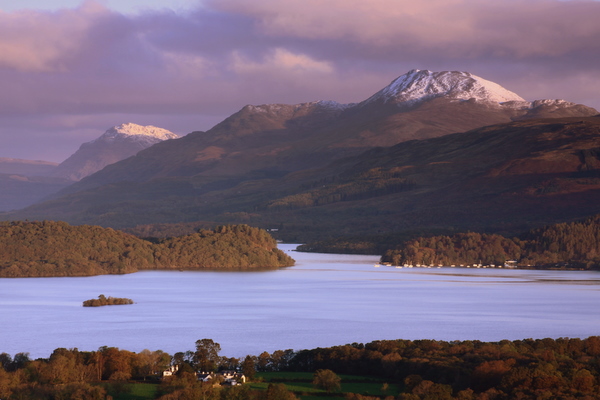
Treasures of Britain; Loch Lomond


As a lot of you know I love, no, adore Scotland. I've been to many places but of course I have also missed a lot of them as well. One of the places I've never been and is still on my list is Loch Lomond. Not in the last place because of this wonderful song; Everyone has his favourite version of this song, this is mine;


Loch Lomond (23 miles/37 km long) is the largest fresh water area in Great Britain, overlooked by stunning hills and forest. The road that runs along the east shore, more wooded and less busy than the west shore, comes to an end at Rowardennan Lodge.


This is a popular destination for hikers following the West Highland Way toward Queen Elizabeth Forest Park or climbing Ben Lomond (3,195 feet/97m).


Loch Lomond and Ben Lomond

The Falls of Inversnaid on the banks of Loch Lomond.

 West Highland Way

Queen Elizabeth Forest Park-
Bracklinn Falls at Calander

Milarrochy-bay sunset

© KH